
Ready to hit the open road in your camper van? A well-designed kitchen setup makes all the difference, and the camper van sink is the heart of it. Whether you’re cooking gourmet meals or washing dishes after a day of adventure, a functional sink transforms your van into a cozy, practical home. This guide covers everything you need to know about camper van sinks, from types and materials to water systems and installation tips. Let’s make your nomadic journey comfortable and efficient.
According to a 2023 study by the RV Industry Association, over 11 million households in the U.S. own an RV, with camper van conversions gaining popularity for their compact versatility. A 2024 report from the National Park Service noted a 7% increase in campground visits, showing more people are embracing van life. A reliable sink setup is key to thriving in this lifestyle. Let’s dive into the details.
Why a Camper Van Sink Matters
A camper van sink isn’t just a luxury; it’s a necessity for RV living. It supports cooking, cleaning, and hygiene, all in a compact space. Without a proper sink, you’re stuck relying on external facilities or juggling water jugs, which disrupts the freedom of van life. A good sink saves time, conserves water, and keeps your van organized.
Van sinks differ from home kitchen sinks. Space constraints in a Mercedes Sprinter Van, Ford Transit, Ram ProMaster, Chevy Express, or GMC Savana demand compact, efficient designs. You need a sink that fits your galley layout, handles bumpy roads, and integrates with a water system. Let’s explore the options.
Types of Camper Van Sinks
Choosing the right sink depends on your van conversion goals, space, and budget. Here are the main types:
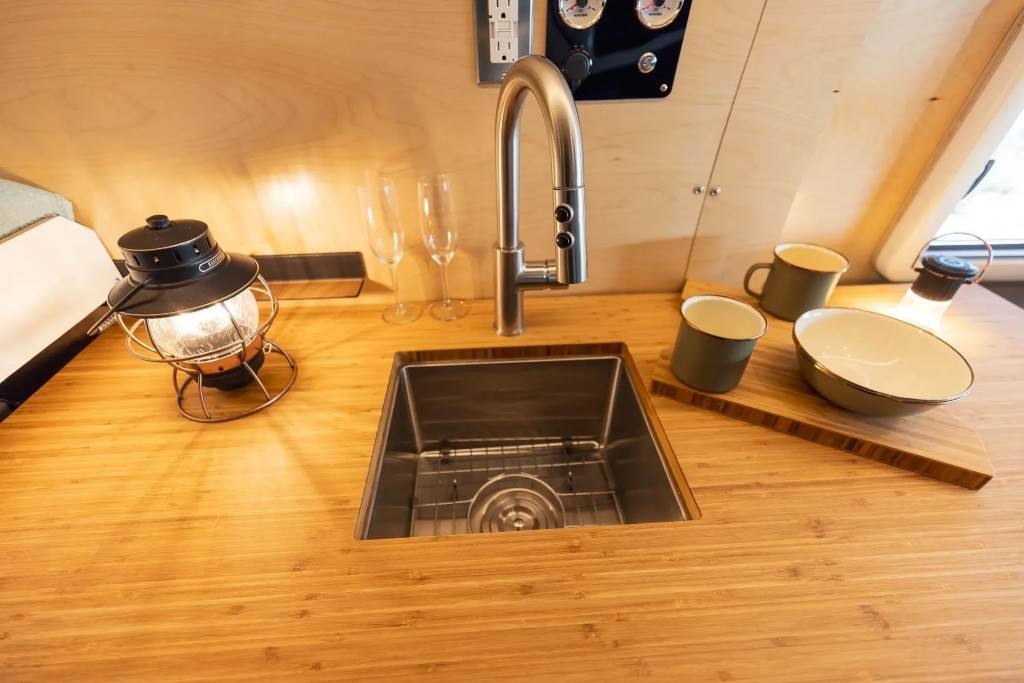
- Drop-In Sinks: These sinks sit on top of the counter with a rim, making installation simple. They’re popular for DIY campervan conversions due to their ease and versatility. A TORVA 16 x 17 x 9″ RV sink is a great example.
- Undermount Sinks: Mounted below the counter, these create a sleek look and maximize counter space. They’re ideal for tiny homes or campervans with a premium aesthetic but require precise installation.
- Workstation Sinks: These include built-in features like cutting boards, drying racks, or ledges. A ledge workstation sink boosts functionality in small spaces, perfect for meal prep on the road.
- Foldable Sinks: Featuring a folding faucet or lid, these save space when not in use. They’re great for van life where every inch counts.
- Portable Sinks: Designed for flexibility, these can be moved or stored. They often pair with a foot pump sink or manual water pump for off-grid setups.
Each type suits different needs. For example, a drop-in design works for beginners, while a workstation sink appeals to serious cooks. Consider bowl depth for washing large pots or hot pans, and ensure the sink fits your galley layout.
Materials for Camper Van Sinks
The material of your sink affects durability, weight, and style. Here are the top options:
- Stainless Steel: Lightweight and durable, stainless steel resists rust and handles rough roads. Black stainless steel or a rusted patina finish adds a modern or rustic vibe.
- Acrylic or Composite: These are lightweight and affordable, ideal for budget-conscious van conversions. However, they may scratch easier than steel.
- Aluminum: Often used in 6063 aluminum framework setups, aluminum sinks are sturdy yet light, perfect for nomadic supply builds.
- Ceramic: Rare in vans due to weight, ceramic offers a premium look but risks cracking on bumpy roads.
Stainless steel is the most popular, with 5 mentions in recent van life product discussions (based on provided data). It’s versatile for RV kitchen sinks and campervan sinks, balancing cost and performance.
Water Systems for Camper Van Sinks
A sink is only as good as its water system. Van life demands efficient water use, especially off-grid. Here’s how to set up a reliable water system:
Fresh Water Tank
A fresh water tank stores clean water for cooking and washing. Sizes like 6-gallon tanks are common for compact vans. BPA-free RV water tanks ensure safety for drinking water. A 2024 Outdoor Industry Association report noted that 68% of van lifers prioritize water storage systems for self-sufficiency.
Gray Water Tank
Gray water tanks collect used water from your sink. A gray water tank or simple drain hose prevents environmental harm. Some vans use a Hepvo valve to stop backflow and odors, a smart choice for tight spaces.
Water Pump Options
- Manual Water Pump: Foot pump sinks or galley pumps save electricity and are easy to install. They’re ideal for off-grid setups.
- Electric Water Pump: These provide consistent water flow but require a power source, like a 48V power kit.
- Water Filter: A water filter ensures clean water, especially when filling from unknown sources. It’s a must for long-term RV living.
Water Jug or Portable Storage
For minimalists, a water jug offers portable water storage. These are easy to refill and store but require manual pouring.
A well-planned water system, like those from The Little Vanporium or Nomadic Supply, keeps your sink functional without wasting resources.
Installation Tips for Camper Van Sinks
Installing a camper van sink requires planning and precision. Follow these steps for a smooth setup:
- Measure Your Space: Ensure the sink fits your counter. A 16 x 17 x 9″ sink is compact yet functional for most vans.
- Choose Installation Type: Drop-in sinks are beginner-friendly, while undermount sinks need advanced carpentry skills.
- Secure the Sink: Use silicone caulk for a watertight seal. Apply it evenly to avoid leaks on bumpy roads.
- Connect the Water System: Attach PVC tubing or a PVC hose to the drain. Link the fresh water tank and pump securely.
- Test for Leaks: Run water through the system to check for issues. A Hepvo valve can prevent gray water backflow.
- Add Accessories: Include a sink cover or cutting board to save space. A cup rinser speeds up dishwashing.
For DIY campervan conversions, consider a Camper Van Conversion DIY Kit for pre-cut parts, often made with Baltic Birch plywood for durability.
Top Features to Look for in a Camper Van Sink
Not all sinks are created equal. Here are must-have features for van life:
- Compact Size: Fits small galley layouts without sacrificing function.
- Durability: Handles hot pans and rough roads without denting or cracking.
- Foldable Faucet: Saves space when not in use, ideal for tiny homes.
- Deep Bowl: A deeper bowl depth accommodates large dishes or soaking laundry.
- Workstation Features: Built-in cutting boards or drying racks maximize counter space.
- Easy Maintenance: Stainless steel or acrylic resists stains and cleans easily.
For example, the Vino collection sink, noted as a best-seller, combines style and function with a foldable faucet and deep bowl.
Popular Camper Van Models and Sink Compatibility
Different van models affect sink choice. Here’s how sinks fit popular vans:
- Mercedes Sprinter Van: Spacious interiors suit workstation sinks or undermount designs.
- Ford Transit: Versatile for drop-in or foldable sinks, especially with custom galley layouts.
- Ram ProMaster: Wide cargo areas fit larger sinks with gray water tanks.
- Chevy Express and GMC Savana: Compact layouts favor portable or foldable sinks.
- Nissan NV: Works well with minimalist setups, like foot pump sinks and 6-gallon tanks.
Each model supports unique kitchen setups, so measure your space and plan accordingly.
Maintaining Your Camper Van Sink
A clean, functional sink keeps your van life stress-free. Follow these tips:
- Clean Regularly: Use mild soap and water to prevent buildup. Avoid abrasive cleaners on black stainless steel.
- Check for Leaks: Inspect silicone caulk and PVC tubing monthly, especially after bumpy roads.
- Empty Gray Water: Dispose of gray water responsibly at designated sites to protect the environment.
- Winterize the System: Drain fresh and gray water tanks in cold climates to prevent freezing.
- Maintain the Pump: For manual water pumps, lubricate moving parts. For electric pumps, check battery connections.
Regular maintenance extends your sink’s life and ensures clean water for your nomadic journey.
Enhancing Your Sink Setup
Boost your sink’s functionality with these add-ons:
- Sink Cover: Doubles as extra counter space or a cutting board.
- Cup Rinser: Speeds up cleaning glasses and small items.
- Water Filter: Ensures safe drinking water, especially off-grid.
- Foldable Faucet: Saves space and adds a sleek look.
- MaxxAir MaxxFan 7500K Roof Vent Fan: Keeps your kitchen ventilated during cooking.
These accessories, like those from Amazon’s Choice or Nomadic Supply, make your kitchen setup efficient and enjoyable.
A Van Lifer’s Sink Setup
Meet Sarah, a van lifer who converted a Ford Transit into her tiny home. She chose a stainless steel drop-in sink with a foldable faucet to save space. Her setup includes a 6-gallon fresh water tank, a gray water tank with a Hepvo valve, and a foot pump sink for off-grid camping. A sink cover doubles as a cutting board, and a MaxxAir MaxxFan Deluxe RV Roof Vent keeps her galley fresh. Sarah’s setup, inspired by The Little Vanporium, handles her cooking and cleaning needs on the open road.
Conclusion
A camper van sink is the cornerstone of a functional van life kitchen. From stainless steel drop-in sinks to foldable faucets and efficient water systems, the right setup makes cooking and cleaning a breeze. Choose a sink that fits your van model, lifestyle, and space constraints. Prioritize durability, compact design, and a reliable water system for off-grid adventures. With proper installation and maintenance, your sink will support your nomadic journey for years.
Ready to build your dream van kitchen? Start by measuring your space and exploring sinks from trusted suppliers like Nomadic Supply or The Little Vanporium. Hit the road with confidence and a sink that works as hard as you do!
FAQs
What is the best material for a camper van sink?
Stainless steel is the top choice for its durability, lightweight design, and resistance to rust. Acrylic is a budget-friendly alternative but may scratch.
How do I install a water system for my van sink?
Connect a fresh water tank to a manual or electric water pump. Use PVC tubing for drainage and a gray water tank or drain hose. Seal with silicone caulk.
Can I use a portable sink for van life?
Yes, portable sinks are great for minimalist setups. Pair them with a water jug or foot pump for easy off-grid use.
How do I maintain my camper van sink?
Clean regularly with mild soap, check for leaks, and empty gray water responsibly. Winterize tanks in cold climates to prevent freezing.
What sink size fits a camper van?
Compact sinks, like 16 x 17 x 9″ models, fit most vans. Measure your galley layout to ensure a proper fit.
References
- RV Industry Association: https://www.rvia.org/reports-trends
- National Park Service: https://www.nps.gov/subjects/camping/statistics.htm
- Outdoor Industry Association: https://outdoorindustry.org/resource/2024-outdoor-participation-trends-report/