
Planning a 7-day road trip in a motorhome is exciting. However, before you hit the open road, you need to think about insurance. Temporary motorhome insurance is a smart, affordable option for short-term trips. It gives you the cover you need without paying for a full annual policy. In this guide, you will learn exactly how to buy it, what it covers, and why it matters.
What Is Temporary Motorhome Insurance?
Temporary motorhome insurance is a short-term policy. It covers your motorhome for a set number of days rather than a full year. You can usually buy cover for as little as one day or up to 28 days, depending on the provider.
This type of insurance is ideal if you are renting a motorhome, borrowing one from a friend, or using your own vehicle just a few times a year. Additionally, it is perfect for first-time road trippers who want flexible, low-cost protection.
Why You Need Insurance for a 7-Day Road Trip
Driving without proper insurance is illegal in most countries. Therefore, having valid cover is not just smart — it is a legal requirement. A 7-day trip may seem short, but a lot can happen on the road.
Accidents, breakdowns, and theft can occur at any time. Without insurance, you could face huge repair bills or legal fines. Temporary insurance gives you peace of mind for the full duration of your trip. It protects you, your passengers, and any other drivers on the road.
Types of Cover Available
Before you buy, it helps to understand the main types of motorhome insurance cover. Each one offers a different level of protection.
Third-Party Only
This is the most basic level of cover. It pays for damage you cause to other people and their vehicles. However, it does not cover damage to your own motorhome. This is the minimum legal requirement in most places.
Third-Party, Fire and Theft
This option adds cover for fire damage and theft of your motorhome. It is a step up from basic third-party cover. Nevertheless, it still does not pay for accidental damage to your own vehicle.
Comprehensive Cover
Comprehensive cover is the most complete option. It pays for damage to your motorhome, damage to others, fire, theft, and often vandalism. For a 7-day road trip, this is usually the best choice. It offers the most protection for a relatively small additional cost.
What Does Temporary Motorhome Insurance Typically Cover?
Coverage varies by provider, but most temporary motorhome insurance policies include the following:
- Accidental damage to the motorhome
- Third-party liability for injuries or property damage
- Fire and theft protection
- Windscreen and glass cover
- European breakdown cover (in some policies)
- Personal belongings cover up to a set limit
Additionally, many insurers offer optional extras. These can include roadside assistance, key replacement, and awning cover. Always read the policy details carefully so you know exactly what is included.
How to Buy Temporary Motorhome Insurance Step by Step
Buying temporary motorhome insurance is straightforward. Follow these steps to get the right cover quickly and easily.
Step 1: Gather Your Vehicle and Personal Details
Before you start comparing quotes, collect the information you will need. This usually includes the motorhome’s registration number, its make and model, its value, and your driving licence details. Having this ready speeds up the process.
Step 2: Decide on the Dates and Duration
You need to know the exact start and end date of your cover. For a 7-day trip, choose your departure date as the start date and add seven days. Make sure your cover does not expire before you return home. It is wise to add an extra day as a buffer, just in case.
Step 3: Compare Quotes Online
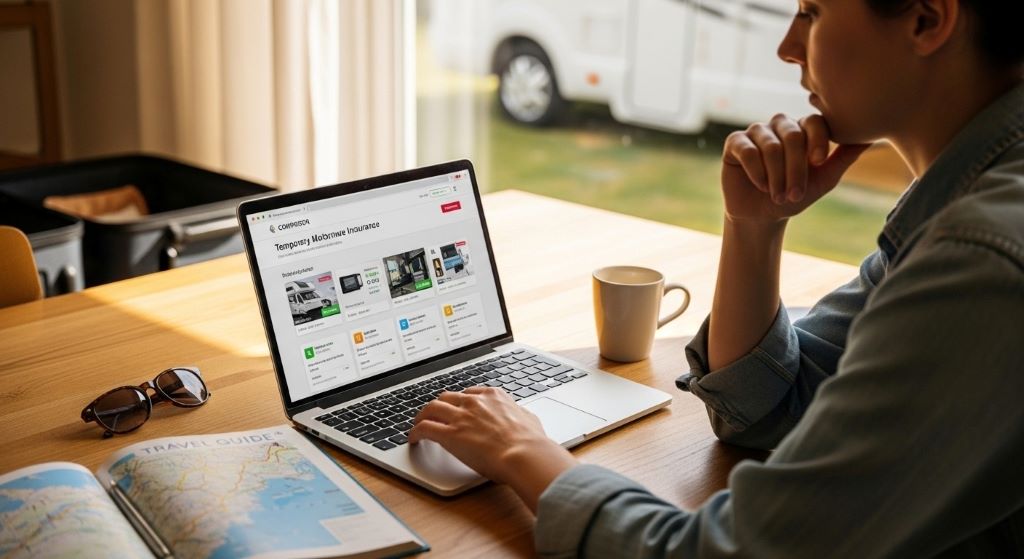
Many insurance comparison websites offer temporary motorhome cover. Enter your details and compare multiple quotes side by side. Look beyond the price alone. Consider the excess amount, the level of cover, and any exclusions.
Popular providers for temporary motorhome insurance include specialist brokers and mainstream insurers. Therefore, it pays to check both. Specialist providers often offer better cover for motorhomes than general car insurance companies.
Step 4: Check the Excess and Exclusions
The excess is the amount you pay towards any claim. A lower premium often means a higher excess. Make sure you are comfortable with the excess amount before you buy. Additionally, check the policy exclusions carefully. Some policies do not cover driving on unsealed roads or in certain countries.
Step 5: Buy Online and Get Instant Cover
Once you find the right policy, you can usually buy it online within minutes. Most providers offer instant cover that starts immediately or at a scheduled time. You will receive your policy documents by email. Print a copy or save one on your phone to carry with you on the trip.
Factors That Affect the Cost of Temporary Motorhome Insurance
The price of a temporary policy depends on several factors. Understanding these helps you find the best deal.
- The age and value of the motorhome — newer, more expensive vehicles cost more to insure.
- Your age and driving history — younger drivers or those with past claims pay higher premiums.
- The level of cover you choose — comprehensive cover costs more than basic third-party.
- Where you plan to travel — international travel often increases the price.
- The chosen excess amount — a higher voluntary excess usually lowers the premium.
However, even with all these variables, temporary motorhome insurance is usually very affordable. A 7-day policy can cost as little as a few pounds or dollars per day, depending on your circumstances.
Tips to Get the Best Deal on Temporary Motorhome Insurance
Getting the best value from your temporary policy is easier with a few simple strategies.
- Always compare at least three to five quotes before deciding.
- Use specialist motorhome insurance brokers, not just general comparison sites.
- Choose a higher voluntary excess if you are confident you will not need to claim.
- Check if your existing home or travel insurance covers any aspects of the trip.
- Book well in advance if possible, as last-minute cover can cost more.
Additionally, some providers offer discounts for experienced motorhome drivers. If you have a clean licence and years of motorhome experience, mention this when getting quotes. It could reduce your premium.
Common Mistakes to Avoid When Buying Temporary Cover
Many first-time buyers make avoidable mistakes. Here are the most common ones to watch out for.
- Choosing cover based on price alone without checking what is included.
- Forgetting to check if the policy covers all named drivers on the trip.
- Not reading the exclusions, which can lead to a refused claim.
- Underestimating the value of the motorhome, which can lead to being underinsured.
- Failing to check if the policy includes breakdown cover, which is essential for long trips.
Therefore, always take a few extra minutes to read the full policy details. It is worth the effort to avoid surprises if something goes wrong.
Is Temporary Insurance Better Than Annual Cover for Short Trips?
For most people taking a single 7-day trip per year, temporary insurance is the better option. It is much cheaper than a full annual policy. You only pay for the days you actually use the motorhome.
However, if you plan several trips throughout the year, an annual policy may work out cheaper in the long run. It is worth doing the maths before you decide. Compare the cost of two or three temporary policies against a single annual one.
Additionally, if you own your motorhome, some annual policies can be paused or suspended when the vehicle is not in use. This can reduce the overall annual cost significantly.
Conclusion
Buying temporary motorhome insurance for a 7-day road trip is simple, fast, and affordable. You now know the types of cover available, what they include, and how to find the best deal. Remember to gather your details, compare multiple quotes, check the excess and exclusions, and buy online for instant cover.
The right temporary policy gives you full protection without the cost of an annual plan. Therefore, there is no reason to delay. Get your quotes today, hit the road with confidence, and enjoy every mile of your 7-day adventure.
Frequently Asked Questions
1. Can I get temporary motorhome insurance on the same day?
Yes. Most online providers offer instant cover that starts within minutes of purchase. You simply enter your details, pay online, and receive your policy documents by email. Cover can begin immediately or at a future start time that you choose.
2. Does temporary motorhome insurance cover European travel?
It depends on the provider. Some temporary policies include European cover as standard, while others offer it as an optional add-on. Always check the policy details before you travel abroad. You may need a Green Card as proof of insurance in some European countries.
3. Can I add a second driver to a temporary motorhome policy?
Yes, most providers allow you to add named drivers to a temporary policy. There may be a small additional cost per driver. Make sure every person who plans to drive the motorhome is listed on the policy. Driving while unlisted could invalidate your cover.
4. What is the minimum age to get temporary motorhome insurance?
The minimum age varies by insurer, but most require drivers to be at least 21 or 25 years old. Some providers will insure drivers from 18, though the premiums are usually higher for younger drivers. Always check the age requirements before applying.
5. What happens if I need to extend my temporary policy mid-trip?
Many insurers allow you to extend your cover online if your plans change. However, you should do this before your existing policy expires. Driving with expired cover, even for a short time, is illegal. Some providers offer an easy extension option via their website or app.
Related Topics:
Camper Van Sink: Your Guide to the Perfect Van Life Kitchen Setup
Campervan Power Calculator: Plan Your Off-Grid Power