
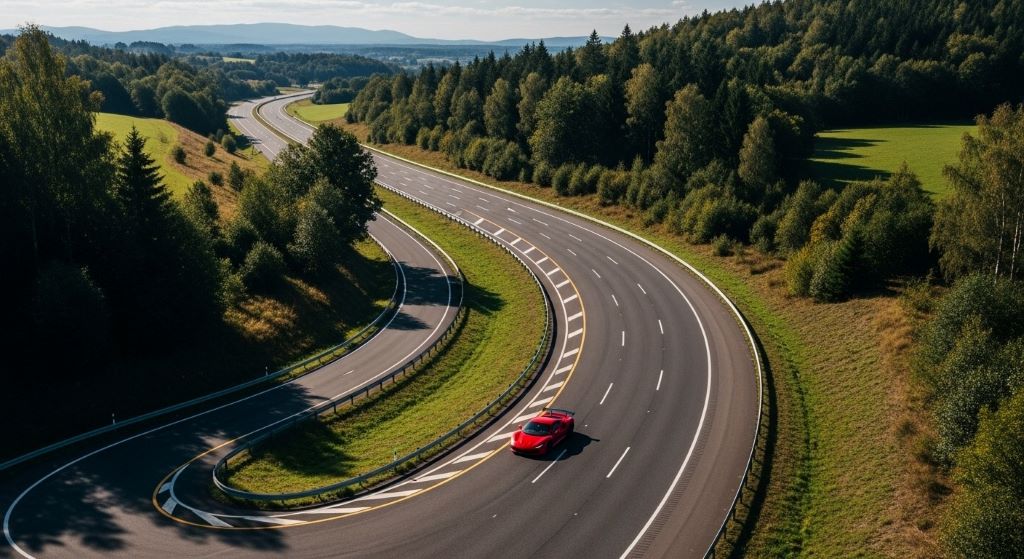
Long sweeping turns can be challenging for many drivers. Unlike sharp corners, these gradual curves require sustained attention and precise control. Therefore, understanding how to maintain stability through these turns is essential for safe driving. This guide will help you master the techniques needed to navigate long sweeping turns with confidence.
Understanding Vehicle Dynamics in Sweeping Turns
When your car enters a long sweeping turn, several forces act upon it simultaneously. Centrifugal force pushes the vehicle outward while your tires work to maintain grip on the road surface. Additionally, weight transfers from the inside wheels to the outside wheels during cornering. This weight shift affects how your car handles throughout the turn.
The length of sweeping turns means these forces act on your vehicle for an extended period. Consequently, small errors in technique can compound over time. Recognizing these dynamics helps you anticipate how your car will behave and respond appropriately.
Proper Entry Speed is Critical
Entering a long sweeping turn at the correct speed sets the foundation for success. Many drivers make the mistake of entering too fast, which forces them to brake mid-turn. However, braking while turning can destabilize your vehicle and increase the risk of losing control.
Before entering the turn, reduce your speed to a comfortable level. A good rule is to slow down more than you think necessary. You can always accelerate gently through the turn if needed. Moreover, entering at a controlled speed gives you more time to react to unexpected situations.
According to the National Highway Traffic Safety Administration, speed management is one of the most important factors in preventing single-vehicle crashes on curves.
Choosing the Correct Line Through the Turn
The racing line concept applies to everyday driving as well. Start wide at the turn’s entrance, gradually move toward the inside apex, then drift back to the outside as you exit. This path maximizes the turn’s radius and reduces the lateral forces on your vehicle.
For public roads, however, you must stay within your lane. Therefore, use the full width of your lane safely. Position your car toward the outside edge as you enter, aim for a point near the inside edge at mid-turn, then return to the outside as you complete the turn.
This technique accomplishes several things. First, it creates a gentler curve for your car to follow. Second, it provides better visibility through the turn. Third, it reduces the steering angle needed, which helps maintain stability.
Smooth and Consistent Steering Input
Jerky or aggressive steering movements upset your car’s balance. Instead, apply steering input smoothly and progressively. Turn the wheel gradually as you enter the curve, then hold it steady through the middle section.
Avoid making constant small corrections to your steering. These adjustments transfer weight back and forth unnecessarily. Consequently, your tires lose grip and your car becomes less stable. Focus on looking far ahead through the turn to help you maintain smooth steering.
Furthermore, your hands should remain at the proper positions on the steering wheel. The traditional nine and three o’clock positions offer the best control. This grip allows you to make precise adjustments without over-steering.
Managing Throttle Control Throughout the Turn
Throttle control plays a crucial role in maintaining stability. The general principle is to be off the throttle or apply light, steady pressure through most of the turn. Sudden acceleration or deceleration mid-turn can break traction.
As you approach the apex of the turn, you can begin gradually applying throttle. This technique, called “trailing throttle,” helps settle the car’s weight onto the rear wheels. Additionally, it prepares you for acceleration as you exit the turn.
Never lift off the throttle abruptly in the middle of a sweeping turn. This action causes rapid weight transfer to the front wheels and can lead to oversteer. Maintain steady, predictable throttle inputs to keep your car balanced.
Weight Transfer and Vehicle Balance
Understanding weight transfer helps you maintain control. When you accelerate, weight shifts to the rear. During braking, it moves forward. In turns, weight transfers to the outside wheels. These shifts affect which tires have the most grip.
The key is making weight transfers gradual and predictable. Smooth inputs with the steering wheel, throttle, and brakes keep the weight from shifting abruptly. Therefore, your tires maintain consistent contact with the road surface.
Front-wheel-drive, rear-wheel-drive, and all-wheel-drive vehicles behave differently during weight transfer. However, the principle of smooth inputs applies to all types. Learn how your specific vehicle responds to practice better control.
Looking Ahead and Planning Your Path
Your eyes should focus far ahead, not at the road directly in front of your car. Looking ahead allows your brain to process information earlier and make smoother corrections. Additionally, your hands naturally steer where your eyes look.
In a long sweeping turn, look toward the exit point as soon as possible. This technique helps you judge the turn’s progression and maintain a consistent line. Moreover, it helps you spot potential hazards with more time to react.
Scan the entire turn as you approach. Look for changes in road surface, debris, other vehicles, or anything that might affect your path. Early awareness gives you options to adjust your approach safely.
Dealing With Different Road Surfaces
Road conditions dramatically affect how your vehicle handles turns. Wet, icy, or gravel-covered surfaces reduce available traction. Therefore, you must adjust your technique accordingly. On slippery surfaces, reduce your entry speed even more and make all inputs gentler.
Uneven pavement or potholes in a turn can upset your car’s balance. If you spot these hazards early, you can position your vehicle to avoid them. However, if avoidance isn’t possible, maintain steady steering and throttle while crossing the problem area.
Banking or camber also affects stability. Roads that slope toward the outside of a turn make it harder to maintain your line. Conversely, banking that slopes into the turn helps your vehicle stay stable. Adjust your speed and steering based on these conditions.
Common Mistakes to Avoid
Several common errors can compromise stability in sweeping turns. First, many drivers focus too much on the road immediately ahead. This short-sighted approach leads to late reactions and jerky corrections. Instead, train yourself to look farther down the road.
Second, improper speed management causes problems. Entering too fast forces you to brake mid-turn, which destabilizes the vehicle. Similarly, accelerating too early can break traction on the drive wheels. Practice patience with both braking and acceleration.
Third, death-gripping the steering wheel creates tension that prevents smooth inputs. Hold the wheel firmly but not rigidly. Relaxed arms allow you to make fluid steering corrections. Additionally, they help you feel what the car is doing through the steering feedback.
Advanced Techniques for Experienced Drivers
Once you master the basics, advanced techniques can further improve stability. Trail braking involves gradually releasing brake pressure as you turn in. This keeps weight on the front wheels longer, improving initial turn-in response. However, this technique requires practice to execute safely.
Throttle steering uses gentle throttle adjustments to fine-tune your car’s attitude mid-turn. In front-wheel-drive cars, slight throttle increases can help pull the car through the turn. In rear-wheel-drive vehicles, careful throttle application can help rotate the car. These techniques demand experience and should be practiced in safe environments.
Understanding your car’s limits comes from seat time and gradual experimentation. Never push your vehicle to its limits on public roads. Instead, consider track days or performance driving schools to safely explore your car’s capabilities.
Vehicle Maintenance for Better Handling
Proper maintenance ensures your car performs optimally in turns. Tire condition affects everything about cornering stability. Check tire pressure regularly, as under-inflated or over-inflated tires compromise grip. Moreover, ensure your tires have adequate tread depth.
Suspension components also matter significantly. Worn shock absorbers or struts reduce your car’s ability to maintain tire contact with the road. Additionally, proper wheel alignment prevents the car from pulling to one side. According to Consumer Reports, regular maintenance checks can prevent many handling-related issues.
Brake system maintenance ensures you can control your speed before entering turns. Worn brake pads or contaminated brake fluid reduce stopping power. Schedule regular brake inspections to maintain optimal performance.
Conclusion
Stabilizing automobile control in long sweeping turns requires understanding vehicle dynamics and applying proper technique. Start by managing your entry speed and choosing the optimal line through your lane. Use smooth, progressive steering inputs and maintain consistent throttle control. Look far ahead to plan your path and anticipate changes in the road.
Remember that different road surfaces and conditions demand adjusted approaches. Avoid common mistakes like looking too close ahead or making abrupt inputs. Keep your vehicle properly maintained to ensure it responds predictably. With practice and attention to these principles, you can navigate long sweeping turns safely and confidently. The key is patience, smoothness, and continuous awareness of how your vehicle responds to your inputs.
Frequently Asked Questions
What speed should I enter a long sweeping turn?
Enter at a speed where you feel completely comfortable maintaining control without braking mid-turn. Generally, this means slower than you might initially think. The specific speed depends on the turn’s radius, road conditions, and your vehicle’s characteristics.
Should I accelerate or decelerate through a sweeping turn?
Ideally, maintain steady throttle or very light acceleration through most of the turn. Avoid braking mid-turn as this destabilizes the vehicle. Begin gradually increasing throttle only after passing the apex and as the turn straightens out.
How do I know if I’m going too fast into a turn?
If you feel your car pushing toward the outside of your lane, hear tire squealing, or need to brake mid-turn, you entered too fast. Additionally, if you feel uncomfortable or tense, reduce your entry speed next time.
Does the type of drive system affect how I should take turns?
Yes, front-wheel-drive, rear-wheel-drive, and all-wheel-drive vehicles behave differently in turns. However, the fundamental principles of smooth inputs, proper speed management, and looking ahead apply to all vehicle types. Learn your specific vehicle’s characteristics through experience.
What should I do if my car starts to lose control in a turn?
Stay calm and avoid abrupt movements. Ease off the throttle gradually, look where you want to go, and steer smoothly toward your intended path. Do not slam on the brakes or make sudden steering corrections, as these actions can worsen the situation.
Related Topics:
Unforgettable June Lake RV Camping: Your Ultimate Guide to Adventure
Conversion Van vs. Camper Van: Which Suits Your Adventure?