
Key Takeaways
- Proper tire pressure can improve fuel economy by up to 3% or more.
- More than a quarter of vehicles on the road have underinflated tires.
- A clean air filter can improve gas mileage by up to 10%.
- Extra weight in your vehicle unnecessarily reduces fuel efficiency.
- Small, consistent maintenance habits often outperform expensive upgrades.
Improving your vehicle’s efficiency does not require expensive upgrades or major repairs. Many drivers overlook simple habits that meaningfully affect fuel economy. Small maintenance tasks, done consistently, often produce noticeable results over time. In this article, we will explore simple ways to improve your vehicle’s everyday efficiency, while drawing on automotive insights and critical consumer warnings from industry experts like https://bereviewers.com/. We will also share useful research, practical tips, and answers to common questions.
Why Everyday Efficiency Matters More Than You Think
Many drivers underestimate how much small habits affect overall fuel efficiency. Poor maintenance often goes unnoticed until fuel costs rise significantly. Therefore, understanding these effects helps explain why everyday habits matter so much.
Tire maintenance offers a clear example of this impact. The U.S. Department of Energy says proper tire maintenance can improve fuel economy by more than 3%. This may seem small, but it adds up significantly over a full year of driving.
Unfortunately, many vehicles on the road fail to meet this basic standard. A National Highway Traffic Safety Administration study found that 27% of passenger cars had at least one significantly underinflated tire. This shows how widespread this simple, avoidable issue has become.
Financial consequences also make this issue worth addressing. Poor fuel efficiency and excessive fuel use can lead to hundreds or thousands of dollars in added expense over a car’s lifetime. Therefore, small maintenance habits can meaningfully protect your long-term budget.
Understanding these connections helps motivate consistent maintenance habits. Efficiency improvements rarely come from one big change alone. Instead, they typically result from several small, consistent efforts working together over time.
Keep Your Tires Properly Inflated
Tire pressure remains one of the most important factors affecting fuel efficiency. Many drivers neglect this simple task, despite its significant impact. Therefore, prioritizing tire maintenance offers one of the easiest efficiency improvements available.
Underinflated tires create real, measurable costs for drivers. Underinflated tires can reduce fuel efficiency by as much as four percent, according to research from the CAA. Additionally, this issue increases rolling resistance, forcing the engine to work harder than necessary.
Checking tire pressure regularly remains surprisingly uncommon among drivers. A survey found that just 28% of motorists check their tire pressure monthly, as recommended. This gap explains why underinflation remains such a widespread issue across vehicles today.
Temperature changes also affect tire pressure more than most drivers realize. Tire pressure changes by about one pound for every ten degrees of temperature shift. Additionally, tires naturally lose about one pound of pressure every 60 days. Therefore, seasonal changes make regular checks especially important.
Here are simple tips for maintaining proper tire pressure:
- Check tire pressure monthly using a reliable gauge.
- Check pressure again after significant temperature changes.
- Follow the manufacturer’s recommended PSI, found on the door jamb.
- Keep a tire gauge in your glove compartment for convenience.
Consistent tire maintenance offers one of the simplest ways to improve everyday fuel efficiency.
Replace Your Air Filter Regularly
A clean air filter plays a surprisingly important role in overall vehicle efficiency. Many drivers overlook this inexpensive maintenance task entirely. However, neglecting it can meaningfully reduce your car’s performance over time.
Air filters directly affect how efficiently your engine operates. A car’s gas mileage could improve by as much as 10% with a clean air filter, according to federal estimates. This shows how significant this small maintenance task can be for overall efficiency.
A dirty air filter restricts airflow into the engine, forcing it to work harder. This added strain increases fuel consumption unnecessarily. Additionally, a clogged filter can reduce engine performance and responsiveness during everyday driving.
Fortunately, air filter replacement remains simple and affordable compared to other repairs. Most vehicles require this maintenance every 12,000 to 15,000 miles, though this varies by model. Checking your owner’s manual helps determine the ideal replacement schedule for your specific vehicle.
Here are quick tips for maintaining your air filter:
- Check your air filter during routine oil changes.
- Replace filters according to your manufacturer’s recommended schedule.
- Inspect filters more frequently if you drive in dusty conditions.
- Choose quality replacement filters recommended for your vehicle model.
Regular air filter maintenance supports both efficiency and overall engine health.
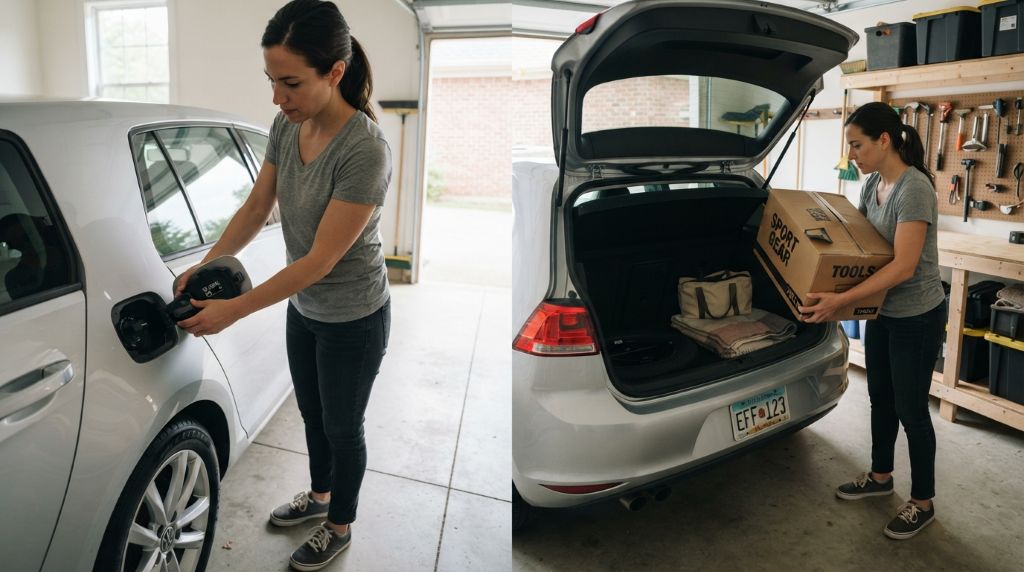
Remove Unnecessary Weight From Your Vehicle
Extra weight in your vehicle reduces fuel efficiency more than most drivers realize. Many cars carry unnecessary items in trunks or cargo areas for extended periods. Therefore, periodically removing excess weight offers a simple efficiency improvement.
Carrying unnecessary items forces your engine to work harder during everyday driving. This applies to sports equipment, tools, or other items rarely used but frequently stored in vehicles. Consequently, removing these items can improve fuel economy without any cost.
This habit requires minimal effort but provides consistent benefits. Periodically checking your trunk and cargo areas helps identify items that can be removed. Additionally, being mindful of what you routinely transport prevents unnecessary weight from accumulating over time.
Roof racks and cargo carriers also affect efficiency, even when empty. These accessories increase wind resistance, which reduces fuel economy at highway speeds. Therefore, removing them when not actively in use provides additional efficiency benefits.
Here are quick tips for reducing unnecessary vehicle weight:
- Regularly check your trunk for unused items.
- Remove roof racks or carriers when not actively needed.
- Avoid storing heavy tools or equipment long-term.
- Keep only essential emergency items in your vehicle.
Reducing excess weight offers a simple, cost-free way to improve everyday efficiency.
Practice Smoother, More Consistent Driving Habits
Driving habits significantly affect fuel efficiency, often more than many drivers realize. Aggressive acceleration and frequent braking waste fuel unnecessarily. Therefore, adjusting your driving style offers another simple, cost-free efficiency improvement.
Smooth acceleration reduces unnecessary fuel consumption during everyday driving. Rapid acceleration forces the engine to work harder than gradual, steady acceleration. Consequently, easing into speed changes supports better overall fuel economy.
Maintaining consistent speeds also improves efficiency, especially on highways. Frequent speed fluctuations waste fuel through repeated acceleration and deceleration. Therefore, using cruise control on highways, when appropriate, can support steadier, more efficient driving.
Reducing idle time further supports better efficiency. Extended idling wastes fuel without providing any driving benefit. Therefore, turning off your engine during longer stops, when safe and practical, helps reduce unnecessary fuel use.
Here are quick tips for improving driving-related efficiency:
- Accelerate gradually rather than rapidly from a stop.
- Use cruise control on highways when conditions allow.
- Avoid unnecessary idling during longer stops.
- Anticipate traffic flow to reduce frequent braking.
Small adjustments to driving habits can meaningfully improve fuel efficiency over time.
Stay Consistent With Routine Maintenance
Routine maintenance plays a significant role in maintaining long-term vehicle efficiency. Many drivers only address maintenance issues after noticing performance problems. However, staying proactive prevents efficiency losses before they become noticeable.
Regular oil changes support smoother engine performance and better fuel economy. Old, dirty oil increases friction within the engine, reducing overall efficiency. Therefore, following manufacturer-recommended oil change intervals supports consistent performance.
Spark plug maintenance also affects efficiency, though it’s often overlooked. Worn spark plugs can cause incomplete fuel combustion, wasting gasoline unnecessarily. Additionally, addressing this issue during routine service visits prevents larger performance problems later.
Choosing quality replacement parts also supports better long-term efficiency. Automakers typically choose tires and components designed for optimal efficiency on specific models. Therefore, selecting similar quality replacements helps maintain your vehicle’s original performance standards.
Here are quick routine maintenance tips for better efficiency:
- Follow manufacturer-recommended oil change schedules consistently.
- Replace spark plugs according to your vehicle’s maintenance schedule.
- Choose quality replacement parts matching original specifications.
- Address minor issues promptly before they affect performance.
Consistent routine maintenance helps preserve your vehicle’s efficiency over its entire lifespan.
Conclusion
Improving your vehicle’s everyday efficiency does not require major investments or complicated changes. Simple habits, like maintaining proper tire pressure and replacing air filters, produce meaningful results. A reliable tire inflator can also make it easier to check and maintain tire pressure regularly, so learning how to choose the best portable tire inflator for your car can be a practical step toward better fuel economy. Reducing unnecessary weight and practicing smoother driving further support better fuel efficiency. Consistent routine maintenance ties these habits together for lasting, long-term efficiency.
As fuel costs continue affecting household budgets, small efficiency improvements matter more than ever. Start by checking your tire pressure and air filter this week. These simple steps can lead to noticeable savings over time, without any significant cost.
Frequently Asked Questions
How often should I check my tire pressure?
Check monthly, and again after significant temperature changes throughout the year.
Does a dirty air filter really affect fuel economy that much?
Yes, a clean air filter can improve gas mileage by up to 10%.
Does removing extra weight from my car really make a difference?
Yes, unnecessary weight forces your engine to work harder, reducing overall efficiency.
Can aggressive driving habits significantly affect fuel efficiency?
Yes, smoother acceleration and consistent speeds noticeably improve fuel economy over time.
How much can proper maintenance actually save me over time?
Consistent maintenance can save hundreds of dollars annually through improved fuel efficiency alone.