
A dirty garage is a common problem. Oil spills, sawdust, metal shavings, and muddy water all find their way onto garage floors. Regular household vacuums cannot handle this kind of mess. That is where a wet dry vacuum comes in.
The good news is that you do not need to spend a fortune. There are plenty of affordable options that perform just as well as expensive models for everyday garage tasks. However, knowing what to look for before you buy makes all the difference.
This guide will help you choose the right budget-friendly wet dry vacuum for your garage, step by step.
Why a Regular Vacuum Will Not Cut It
Most household vacuums are built for carpets and light dust. They are not designed to handle liquids, sharp debris, or heavy particles. Using one in the garage can damage the motor or clog the filter within minutes.
A wet dry vacuum, on the other hand, is purpose-built for tough environments. It can pick up water, gravel, sawdust, nails, and even fine powder without a problem. Therefore, investing in the right garage cleaning machine is not just about convenience — it protects your tools and keeps your workspace safer.
Understanding How Wet Dry Vacuums Work
Before shopping, it helps to understand the basics. A wet dry vacuum uses a two-stage system. The first stage separates large debris from the airflow. The second stage pushes air through a filter to catch fine particles.
For wet pickup, most models require you to remove the filter before use. Some newer designs come with separate wet and dry filters, which saves time. Additionally, the collected liquid drains through a port at the bottom of the tank, so you do not have to tip the unit over to empty it.
Understanding these features will help you compare models more effectively when you are on a budget.
Key Factors to Consider Before Buying
Tank Size
Tank size is one of the first things to check. It determines how much you can vacuum before stopping to empty the unit.
For a standard two-car garage, a tank between 5 and 12 gallons is usually enough. Smaller tanks are lighter and easier to move around. Larger tanks mean fewer interruptions but add weight and bulk.
If you mostly deal with dry debris like sawdust and grit, a 5 to 6-gallon tank is perfectly fine. However, if you frequently clean up liquid spills, a larger tank will serve you better.
Suction Power and Motor Strength
Suction power is measured in horsepower (HP) or air watts. For garage use, look for a motor rated at least 3 to 5 HP. This range is enough to handle most workshop debris without breaking the bank.
More power does not always mean better performance. A well-designed 3 HP motor with a good filter setup can outperform a 6 HP unit with poor airflow design. Therefore, always read reviews and check actual user feedback, not just spec sheets.
Filtration System
Filtration matters more than most buyers realize. A poor filter lets fine dust pass back into the air you breathe. This is a real concern in garages where sanding, grinding, or cutting happens regularly.
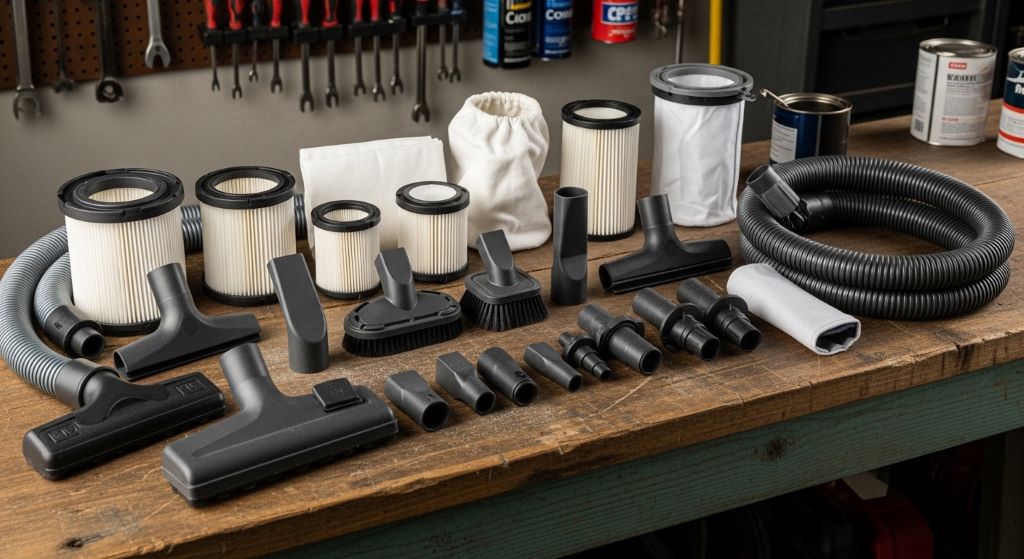
Look for models with a foam sleeve filter for wet jobs and a pleated cartridge filter for dry use. Some budget models include both. A good dust extractor setup will capture fine particles down to 1 to 5 microns, which protects your lungs over time.
Additionally, washable filters save money in the long run. Replacement filters can cost anywhere from $10 to $30 each, so reusable ones reduce your ongoing expenses.
Hose Length and Accessories
A short hose limits where you can reach. For garage use, look for a hose at least 6 feet long. Some models include extensions that can double this reach.
Accessories add versatility. A floor nozzle, crevice tool, and brush attachment cover most cleaning scenarios. However, not all budget models include a full accessory kit. Check what comes in the box and factor in the cost of any extras you might need.
Noise Level
Wet dry vacuums are not quiet machines. However, some are louder than others. If you use your garage workshop in the evenings or live in a neighborhood with noise restrictions, decibel levels matter.
Most budget models run between 75 and 85 decibels. That is roughly as loud as a lawnmower. Wearing ear protection during extended use is always a good habit regardless of the model you choose.
Portability and Build Quality
Garage cleaning often means moving the vacuum around obstacles, tools, and vehicles. Look for a model with a sturdy handle and smooth-rolling casters. Large rear wheels make it easier to drag across uneven concrete floors.
Build quality is another concern with budget options. Plastic tanks and housings are standard, but the thickness and rigidity vary. Thin shells crack over time. Run your hands over the unit in a store, or read reviews that specifically mention durability after long-term use.
Budget Ranges and What to Expect
You can find solid wet dry vacuums for garage use in three general price brackets.
Under $50: These are entry-level models with small tanks (2 to 5 gallons) and basic accessories. They work for light garage tasks like sweeping up sawdust or picking up small spills. However, they may struggle with heavy or continuous use.
$50 to $100: This is the sweet spot for most garage owners. In this range, you get better suction, larger tanks, and more accessories. Many of the best-reviewed garage cleaning machine options fall here. Build quality also improves noticeably.
$100 to $150: At this level, you start to see features like automatic filter cleaning, quieter motors, and premium accessories. If you use your garage regularly for woodworking or automotive work, this investment makes sense.
Top Features That Justify Spending a Little More
Even on a tight budget, certain features are worth paying a bit extra for. Here is what to prioritize:
- An automatic filter cleaning mechanism, which shakes the filter clear without stopping work
- A blower port, which lets you reverse airflow to blow out tight spaces or inflate items
- A detachable blower function for clearing leaves and debris outside the garage
- A drain port at the base of the tank for quick liquid disposal
- A cord wrap or onboard hose storage to keep things tidy between uses
These features extend the usefulness of the vacuum beyond basic garage cleaning and give you better value overall.
Common Mistakes to Avoid When Buying Cheap
Buying cheap does not mean buying carelessly. There are a few mistakes that buyers often make when shopping for budget models.
First, ignoring filter compatibility is a common error. Some budget models use proprietary filters that are hard to find or expensive to replace. Always check filter availability before buying.
Second, skipping the accessories check is another misstep. A vacuum with no useful attachments forces you to buy extras separately, which quickly adds up. Make sure the kit covers at least the basics.
Third, overlooking the warranty is risky. Even budget models should come with at least a one-year warranty. A manufacturer that does not stand behind their product for at least a year is a red flag.
Finally, choosing based on tank size alone leads to disappointment. A large tank with weak suction is far less useful than a smaller tank on a powerful motor. Balance both factors when comparing options.
Tips for Getting the Most Out of Your Vacuum
Once you have your vacuum, a few simple habits will keep it running well for years.
Clean the filter regularly. A clogged filter reduces suction fast. Most pleated filters can be tapped clean or rinsed with water and left to dry before reuse.
Empty the tank before it gets too full. Running a wet dry vacuum with an overfull tank can damage the motor. Make it a habit to check the fill level during longer cleaning sessions.
Store it properly. Leaving a vacuum with a wet tank in a cold garage can cause mildew or damage internal seals. Always empty and dry the tank after wet use.
Replace worn accessories. Cracked hoses and torn nozzles reduce performance significantly. Replacements are cheap and easy to find online.
How a Dust Extractor Differs From a Standard Wet Dry Vacuum
This is a question many garage owners ask. A dust extractor is a specialized version of a wet dry vacuum. It is designed primarily for capturing very fine dust produced by power tools like sanders, routers, and circular saws.
Most dust extractor models connect directly to power tools through a synchronized on/off switch. When the tool runs, the extractor turns on automatically. This integration keeps your workspace cleaner without extra steps.
For general garage cleaning, a standard wet dry vacuum is usually enough. However, if you do regular woodworking or drywall work, a dedicated dust extractor offers better air filtration and is worth the extra investment.
Conclusion
Choosing a cheap wet dry vacuum for garage cleaning does not mean settling for poor quality. It means being smart about what features matter most for your specific needs.
Start by deciding on the right tank size for your space. Then check motor strength, filtration quality, and hose length. Factor in accessories, warranty, and filter availability before making your final choice.
The $50 to $100 range offers the best balance of performance and value for most garage owners. Whether you need a reliable garage cleaning machine for everyday maintenance or a setup that doubles as a basic dust extractor for workshop tasks, the right vacuum is out there at a price that makes sense.
Take your time, compare a few models, and read real user reviews. A little research goes a long way when buying on a budget.
Frequently Asked Questions
- What size wet dry vacuum is best for a two-car garage? A tank between 6 and 12 gallons is ideal for a two-car garage. It gives you enough capacity to clean the full space without stopping too often to empty the tank.
- Can I use a cheap wet dry vacuum to pick up water on a garage floor? Yes. Most wet dry vacuums, even budget models, are designed to pick up liquids. Just remember to remove the dry filter before switching to wet pickup mode.
- How often should I clean the filter on my wet dry vacuum? For regular garage use, clean the filter after every two to three sessions. If you are vacuuming fine sawdust or drywall dust, clean it more frequently to maintain strong suction.
- Is a wet dry vacuum the same as a dust extractor? Not exactly. A dust extractor is built specifically for fine dust and often connects directly to power tools. A wet dry vacuum is more versatile but may not filter as finely. For general garage use, a wet dry vacuum is usually sufficient.
- What accessories should come with a budget wet dry vacuum? At minimum, look for a hose, a floor nozzle, a crevice tool, and a brush attachment. These four pieces cover most garage cleaning tasks and should be included even with entry-level models.
Related Topics:
How to Choose the Best Portable Tire Inflator for Your Car in 2026
Car Cleaning Kit Essentials: What Every Driver Needs